
Cartesian Platform
Physical AI for the Warehouse. From Operating Context to Coordinated Execution.
The Cartesian Platform connects warehouse operating context, Digital Twin validation, operational intelligence, orchestration, and physical execution through one software-defined foundation.
Understand what should change. Validate alternatives before deployment. Coordinate execution across workflows, systems, and automation. Then introduce the right level of physical automation where the operation actually needs it.
Bring demand, inventory, workflows, systems, resources, facility constraints, and automation into a common operating context.
Evaluate workflows, capacity, constraints, and automation alternatives digitally before making physical changes.
Connect enterprise priorities with inventory, workflows, resources, systems, and automation through a common execution layer.
Optimize, coordinate, or automate at the appropriate level, then use operating data to inform what should change next.
Explore the Platform
One Platform. Connected Capabilities.
Explore the capabilities that connect warehouse context, intelligence, orchestration, and physical execution through the Cartesian Platform.
Select a component to explore
Physical Execution
Carte+ / ORR
Introduce rack-native physical execution where throughput, labor, capacity, or workflow requirements support deeper automation.
Adaptive Automation connects the capabilities rather than becoming another component. Cartesian can model the operation, coordinate existing technology, and introduce deeper physical execution where the operating case supports it.
How the Platform Works
From Operating Context to Adaptive Execution.
The Cartesian Platform connects what the warehouse knows with what the operation needs to do next—bringing operating context, intelligence, Adaptive Automation, and execution into one continuous system.
Model the current operation and evaluate workflows, capacity, constraints, and future scenarios before changing the floor.
Bring performance and operating context together to expose constraints and inform what should change next.
Translate operating priorities into coordinated work across workflows, systems, resources, inventory, and automation.
What Is the Right Level of Intervention?
Use operating evidence to determine whether the appropriate response is to optimize, coordinate, or automate.
Improve What Already Exists
Use software and operating intelligence to improve the current operation before deeper physical automation is required.
- Slotting + inventory positioning
- Workflow optimization
- Planning + resource allocation
Connect the Operation
Bring systems, workflows, resources, and existing automation into coordinated execution around shared operating priorities.
- WMS + OMS priorities
- AMRs + AGVs + conveyance
- Existing systems + workflows
Add Physical Execution
Introduce deeper physical automation where the operating constraint and business case support it.
- Carte+
- Omni Rack Robotics
- Rack-native physical execution
Execution creates new performance data and operating context that informs what should happen next.
Live StateExecution Creates the Next Operating Context.
The platform does not stop when work is executed. Live operating data creates a new view of warehouse performance—helping teams understand what improved, where constraints remain, and what should change next. Adaptive Automation evolves with the operation.
Model Before You Change the Floor
Test the Operation Before You Change It.
The Digital Twin gives the Cartesian Platform a way to evaluate change before it reaches the warehouse floor—modeling the current operation, testing alternatives, and using operating evidence to determine what should happen next.
Bring demand, inventory, layout, workflows, resources, and operating constraints into view.
Represent the operation digitally so its behavior can be evaluated without disrupting the floor.
Compare workflow, software, capacity, resource, and automation alternatives.
Use modeled operating outcomes to determine what should move toward deployment.
Start With Evidence. Not an Equipment Assumption.
The objective is not to prove that more automation is always the answer. It is to understand where process changes, software, orchestration, or physical automation can create the most meaningful improvement.
Represent facility conditions, inventory, workflows, demand, resources, and constraints in a digital environment.
Compare different workflows, operating rules, capacity assumptions, and automation approaches before committing to a physical change.
Use modeled operating outcomes to refine the business case and determine which intervention should move forward.
Explore the dedicated Digital Twin experience for simulation, validation, and virtual commissioning.
Explore the Digital Twin →The Digital Twin makes modernization a decision process before it becomes an equipment project. What is learned here can inform workflow optimization, orchestration, existing automation, Carte+, or a combination of interventions.
Orchestrate the Operation
Coordinate the Operation. Not Just the Robots.
Cartesian orchestration connects enterprise priorities with live warehouse context—helping systems, workflows, resources, and automation execute around the same operating objectives.
Turn Priorities Into Coordinated Work.
Translate business intent into executable work, determine what should happen next, and coordinate that work across the resources and automation available to the operation.
What work is required and what needs attention first.
Where inventory is and how its state affects execution.
How work moves through the operation and where dependencies exist.
People, equipment, automation, capacity, and availability.
Turn Business Intent Into Work.
Bring priorities, commitments, constraints, and live conditions together before deciding what should execute next.
Synchronize the Operation.
Coordinate workflows, inventory, resources, and automation around the same operating context.
Adapt as Conditions Change.
Use live state and exceptions to inform the next decision as operating conditions change.
Connect Enterprise Intent to Physical Execution.
Cartesian does not need to replace the systems already running the warehouse. The platform connects business priorities, operating context, and execution so workflows and automation can operate as a more coordinated system.
Physical Execution
From Intelligence to Physical Execution.
Intelligence creates value when it can change what happens on the warehouse floor. Cartesian connects software decisions to physical execution through Carte+ and the broader automation already operating across the facility.
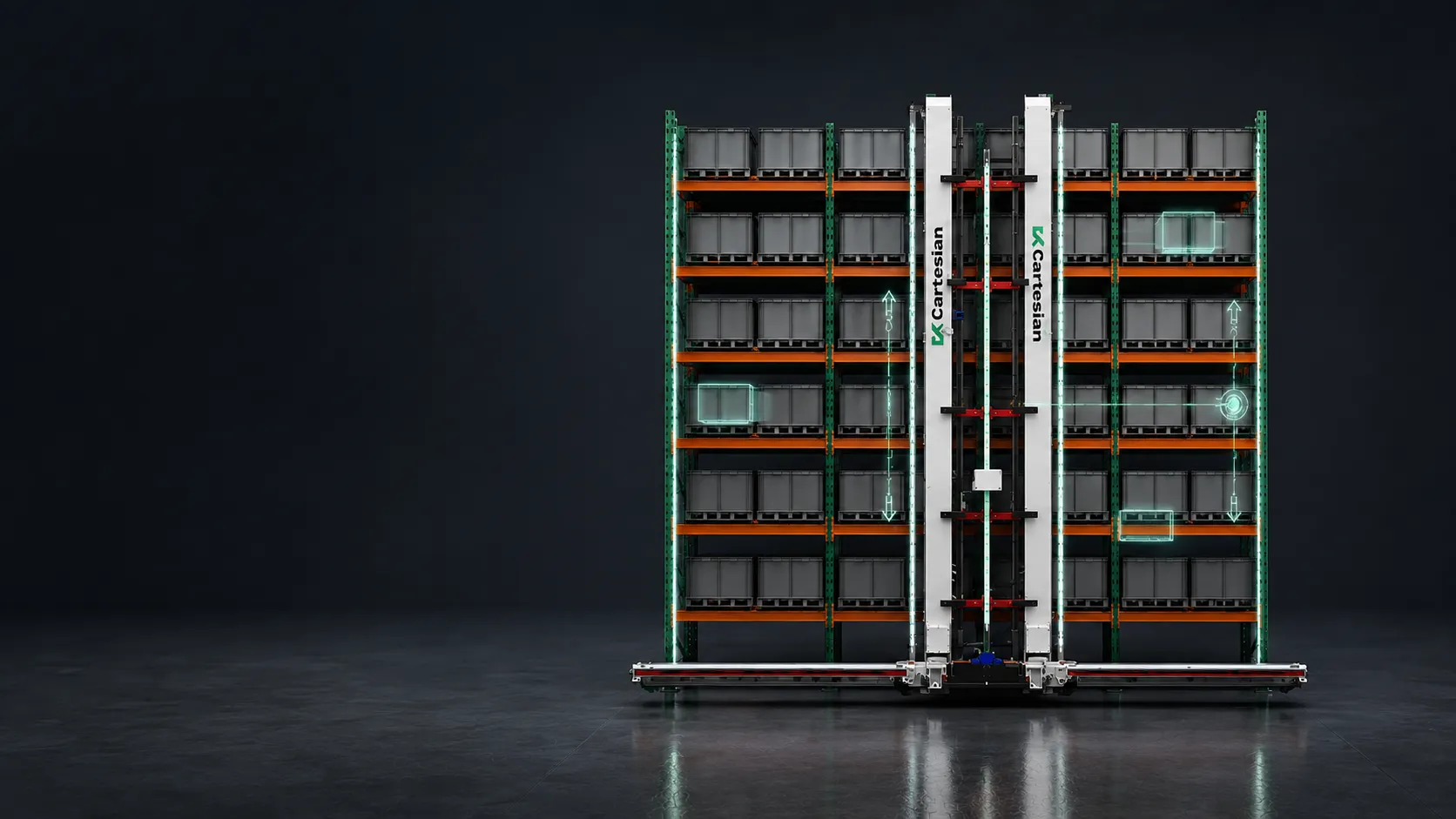
Cartesian Physical Execution
Bring Automation Into the Rack.
Carte+ converts Cartesian software decisions into rack-native material movement—bringing storage, retrieval, vertical movement, and aisle-to-aisle transfer into compatible rack environments.
Coordinate What Is Already on the Floor.
The platform can extend the same operating context across connected automation and downstream workflows rather than treating each technology as an isolated system.
Coordinate mobile transport with broader workflow priorities.
Connect directed transport to coordinated execution.
Coordinate material flow and workflow handoffs.
Connect downstream work to shared execution priorities.
One Intelligence Layer. Multiple Paths to Action.
Carte+ provides Cartesian's rack-native physical execution layer. Connected automation extends that operating model across other workflows and equipment, allowing modernization to progress without requiring every technology on the warehouse floor to be replaced.
Built for Existing Operations
Built for the Warehouse You Already Run.
Modernization does not have to begin with replacing the systems, automation, infrastructure, and workflows already supporting the operation. Cartesian starts with that environment and introduces change where it can create the most value.
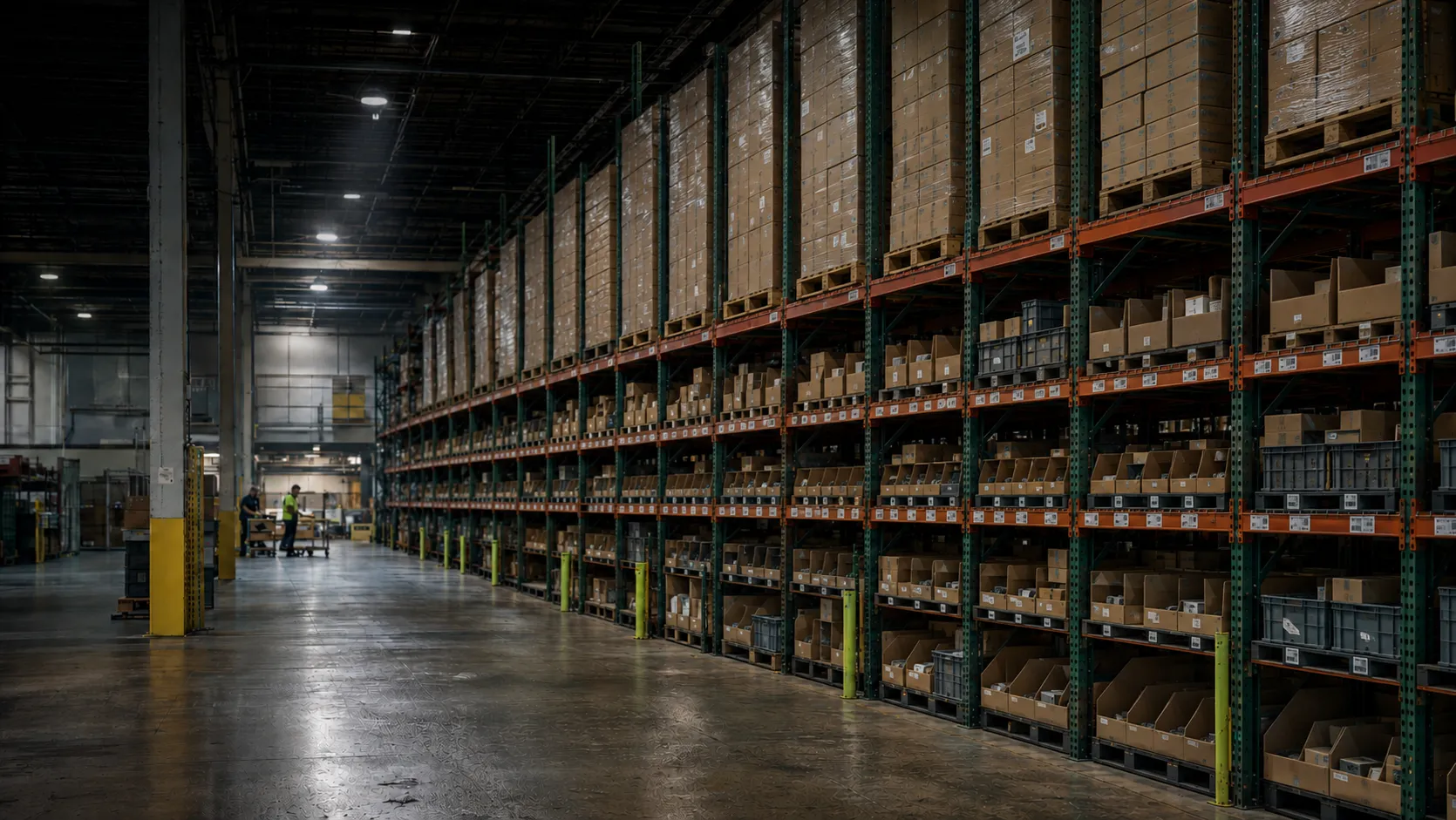
Existing warehouse technology represents years of operating decisions, integrations, workflows, and investment. The Cartesian approach is to connect and improve that environment before determining what needs to change.
Connect Existing Systems.
Bring enterprise priorities and operational data into the platform while keeping the systems that already manage the business.
Keep Useful Automation.
Existing automation does not need to become obsolete simply because the operation introduces another layer of intelligence.
Work With Brownfield Reality.
Modernization should account for the facility, rack environment, operating constraints, and processes that already exist on the floor.
Modernize Progressively.
Start with the intervention that addresses the current constraint, then expand as operational evidence supports the next step.
Expand Across the Operation.
Extend the same platform approach into additional workflows, automation, areas, and facilities as modernization priorities evolve.
Make More of the Existing Stack Work as One Operation.
The objective is not to replace the warehouse technology stack. It is to create enough shared operating context, intelligence, and coordination that existing systems, workflows, automation, and new physical execution can work together more effectively.
From Platform to Production
Modernize With a Path From Insight to Action.
The Cartesian Platform brings the modernization process together—from understanding the current operation and validating what should change to coordinating execution and adapting as the warehouse evolves.
Start with the operation, not an equipment assumption. Use intelligence to understand what should change, validate the direction before deployment, coordinate execution across the operation, and use new operating data to inform what comes next.
Understand
Bring warehouse operating context together so priorities, constraints, workflows, inventory, resources, and existing automation can be seen as one operation.
Operating Context + Operational IntelligenceValidate
Model alternatives and evaluate the operating impact before process, software, or physical changes become the expensive part of learning.
Digital Twin + Scenario ValidationCoordinate
Translate enterprise priorities into coordinated work across workflows, systems, resources, inventory, and connected automation.
Orchestration + Shared Operating ContextExecute + Adapt
Turn decisions into action through software, connected automation, and physical execution, then use new operating data to inform the next decision.
Carte+ + Connected Automation + TelemetryProduction is not the end of the model. Live operating outcomes become new context for the platform, creating a continuous path to learn, adapt, and evaluate what should change next.
Learn + AdaptFind the Right Place to Start.
Understand the current state, model potential changes, and determine where software, orchestration, connected automation, or rack-native physical execution can create the greatest operational value.
Start with the operating challenge. Determine the appropriate level of intervention from there.